


Total Loss Appraisal in Massachusetts
Get Your Free Estimate in minutes.
If your car was declared a total loss and you’re not happy with the insurance payout, you have the right to request a Massachusetts total loss appraisal. SnapClaim helps you dispute unfair insurance valuations with certified, data-backed reports that show your vehicle’s true fair market value.
No credit card required [Takes less than 30 second]
Total Loss Appraisal in Massachusetts: What You Need to Know
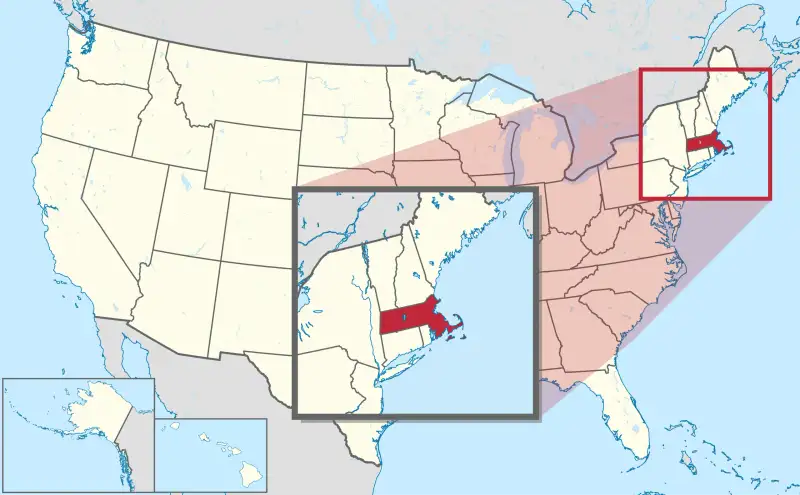
Massachusetts Total Loss Appraisal — Dispute a Low ACV Offer & Get a Fair Settlement
If your vehicle was declared a total loss in Massachusetts and the insurance payout feels too low, you are not required to accept it. You have the right to request an independent Massachusetts total loss appraisal to determine your vehicle’s true Actual Cash Value (ACV) immediately before the accident.
From Boston, Cambridge, Quincy to Worcester, Springfield, Lowell and communities across the state, SnapClaim helps Massachusetts drivers and attorneys challenge inaccurate insurance valuations using local, market-supported data.
Our certified total loss appraisal reports are data-driven, USPAP-aware, and insurer-ready — commonly used in negotiations, appraisal clause disputes, and small-claims matters throughout Massachusetts.
Why Get a Total Loss Appraisal in Massachusetts?
Massachusetts vehicle pricing is heavily influenced by dense urban markets, limited parking, high replacement costs, and strong demand for certain trims. Automated valuation tools often rely on broad regional averages that fail to reflect true local pricing.
- Higher vehicle prices in Boston and surrounding metro areas
- Pricing differences between eastern Massachusetts and western regions
- High demand for low-mileage, commuter-friendly vehicles
- Trim levels, safety packages, and options frequently miscoded
CCC, Mitchell, or Audatex reports may undervalue Massachusetts vehicles by pulling comps from cheaper markets, misidentifying trim or mileage, or applying unsupported condition deductions. A SnapClaim appraisal focuses on Massachusetts-relevant comparables and transparent valuation logic.
Common Reasons to Question a Massachusetts Total Loss Offer
- Incorrect trim, drivetrain, or factory options listed
- Comparables sourced outside the Boston or regional market
- Excessive condition deductions without documentation
- Mileage adjustments that don’t reflect local driving patterns
- Higher trims or premium packages valued as base models
What’s Included in Your Massachusetts Total Loss Appraisal Report
- Full VIN-decoded analysis confirming trim, drivetrain, and installed features
- Comparable listings sourced from Massachusetts and nearby regional markets
- A clearly supported pre-loss fair market value (ACV)
- Adjustments for mileage, options, upgrades, and overall condition
- Documentation to support invoking the appraisal clause under your policy
- Optional expert support if the dispute escalates or involves legal counsel
Most Massachusetts total loss appraisals are completed in about 1 hour and are ready to submit directly to the insurance adjuster.
Massachusetts Total Loss Disputes & Appraisal Rights
Many Massachusetts auto insurance policies include an appraisal clause allowing either party to dispute a vehicle’s value using independent appraisers. If the appraisers cannot agree, a neutral umpire may determine the final value.
- Massachusetts Division of Insurance
- Massachusetts RMV — Vehicle Services
- Massachusetts Courts — Small Claims
How to Dispute a Total Loss Offer in Massachusetts
- Request the insurer’s valuation report (CCC, Mitchell, or Audatex).
- Review the report carefully for errors in trim, mileage, or condition.
- Order a SnapClaim total loss appraisal to establish true ACV.
- Invoke the appraisal clause if the offer is unsupported.
- Negotiate using documented market evidence to support a higher payout.
Massachusetts Market Insights
- Boston-area pricing often exceeds statewide averages.
- Low-mileage vehicles command strong premiums.
- Urban demand increases replacement cost.
- Limited inventory in metro areas impacts fair value.
Example Massachusetts Case Study
Vehicle: 2021 Toyota RAV4 XLE AWD
Insurance Offer: $29,100
SnapClaim Appraisal: $34,600
Outcome: Settlement increased after submitting the independent appraisal
Helpful Massachusetts Resources
- MA Auto Insurance Consumer Guide
- Massachusetts Courts — Small Claims
- Massachusetts RMV
- NHTSA — Vehicle History Search
Ready to Get Your Massachusetts Total Loss Appraisal?
- No upfront payment required
- Most reports completed in about 1 hour
- Insurer-ready documentation with market-backed ACV
Related Massachusetts Locations
Click a pin to open the city’s total loss page.
Find your Massachusetts city below to order your Total Loss Appraisal.
Order Your Total Loss Appraisal
Get Your Appraisal Report and Demand Letter Now!
Free Estimate, no credit card required.

Dispute an Unfair Total Loss Offer in Massachusetts
If your car was declared a total loss in Massachusetts but the insurance payout seems too low, you don’t have to accept it. Under your policy’s appraisal clause, you can request an independent Massachusetts total loss appraisal to verify your vehicle’s true fair market value. SnapClaim makes it simple — get a certified total loss report, invoke your appraisal rights, and negotiate a higher settlement — all within minutes.
“After my hatchback was declared a total loss following a busy intersection crash in Waltham, the insurance company’s offer came in far below what similar vehicles were selling for across Massachusetts. I ordered a SnapClaim appraisal, and their report clearly documented the true market value using local and statewide comps. Once I submitted it, the insurer increased my settlement by more than $3,200.”
Elena M.,
Waltham, MA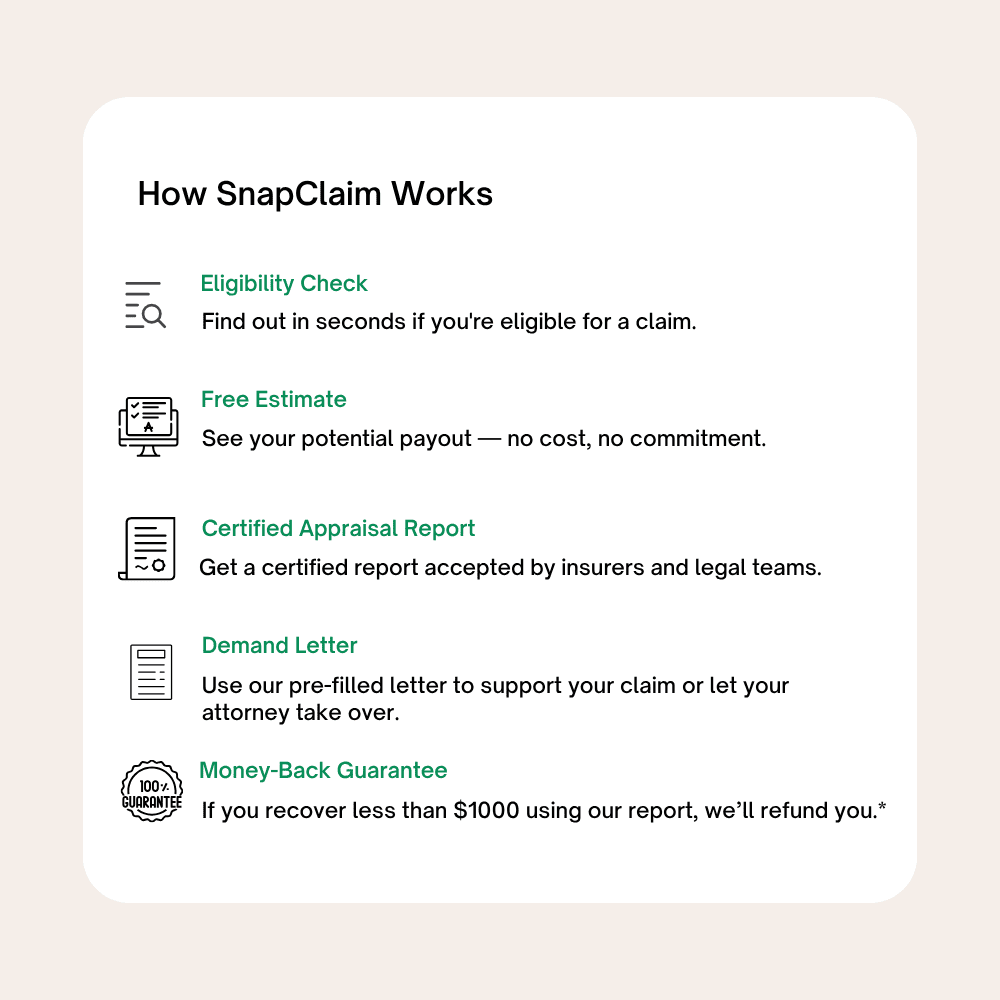
Massachusetts Total Loss – Frequently Asked Questions
When is a vehicle considered a total loss in Massachusetts?
Massachusetts total loss decisions are commonly handled using a Total Loss Formula (TLF) approach. A vehicle is generally treated as a total loss when the insurer decides it is not economical to repair because the cost of repairs plus salvage value approaches or exceeds the vehicle’s Actual Cash Value (ACV) immediately before the crash. See how Massachusetts compares to other states here: total loss laws by state.
What does Actual Cash Value (ACV) mean on a Massachusetts total loss claim?
ACV is your vehicle’s fair market value right before the accident. It should be supported by real Massachusetts listings and local pricing—metro and regional markets (for example Boston, Worcester, Springfield, Cambridge, Lowell, Brockton, Quincy, Lynn, New Bedford, and nearby areas)—then adjusted for year, trim, mileage, options, and condition. Learn how ACV should be calculated: Fair Market Value & ACV.
The Massachusetts total loss offer seems low — what should I review in the valuation?
Ask for the insurer’s full valuation report (CCC, Mitchell, Audatex, etc.) and check for: incorrect trim, missing packages/options, mileage errors, condition deductions that don’t match photos, or comps from cheaper out-of-area markets (including out-of-state listings that don’t reflect Massachusetts demand). Many drivers and law firms use an independent SnapClaim Massachusetts total loss appraisal to support a higher, data-backed ACV: order a Massachusetts total loss appraisal.
Does Massachusetts use a fixed percentage threshold to total a car?
Massachusetts is often handled using the Total Loss Formula rather than a single published percentage. That means the decision often turns on whether repair costs plus salvage value are close to or greater than the vehicle’s ACV. Insurers may also declare an economic total loss based on safety and repair feasibility.
What happens to my title if my car is totaled in Massachusetts?
When a vehicle is processed as a total loss in Massachusetts, it is typically issued a salvage/branded title (or salvage documentation). If the vehicle is repaired, Massachusetts may require inspections and documentation before it can be titled and registered again. Salvage history can affect resale value and insurance options.
Can I keep my totaled vehicle in Massachusetts and repair it?
Often, yes. If you choose to retain the salvage, the insurer typically reduces your payout by the vehicle’s estimated salvage value. You keep the vehicle and then follow Massachusetts’ rebuild and inspection requirements before it can be legally driven again. A proper appraisal helps confirm ACV and salvage deductions are fair: talk to our Massachusetts appraisal team.
What if the salvage value deduction is too high?
Salvage value can vary depending on demand and how the insurer estimates it (auction bids, vendor tools, or generic tables). If you’re keeping the vehicle, ask for the supporting documentation behind the salvage number. An inflated salvage deduction can shrink your settlement, and an independent appraisal can help you dispute it: Massachusetts total loss appraisals.
Will my Massachusetts total loss payout include sales tax and DMV fees?
Many total loss settlements include applicable taxes and certain title/registration fees needed to replace the vehicle, but practices vary by insurer and policy. Always request an itemized breakdown showing ACV, taxes, fees, and deductions so you can verify accuracy.
What if I owe more on my auto loan than the total loss settlement in Massachusetts?
If your loan payoff is higher than the settlement, you have negative equity. You’re typically responsible for the remaining balance unless you have GAP coverage (or similar protection) that covers some or all of the difference. A properly supported ACV can reduce the shortfall.
How long do I have to pursue a property damage or total loss claim in Massachusetts?
Massachusetts has statutes of limitations that set deadlines for property damage and injury claims. The applicable deadline depends on your facts and can change over time. Missing a deadline can affect your rights, so consult a Massachusetts attorney if timing may be an issue. SnapClaim supports negotiations with valuation reports: see how our Massachusetts reports are used.
Does my Massachusetts auto policy have an appraisal clause for ACV disputes?
Many auto policies used in Massachusetts include an appraisal clause for disputes over vehicle value (ACV). Typically, each side selects an appraiser; if they can’t agree, a neutral umpire helps decide the amount. This process is most commonly used when the claim is under your own coverage. A detailed valuation can strengthen your position: Massachusetts total loss appraisals.
Does SnapClaim work statewide in Massachusetts, including smaller towns?
Yes. SnapClaim supports valuations across all of Massachusetts—metro areas and smaller communities. Our reports use hyper-local comparable vehicles so the valuation reflects real Massachusetts pricing instead of generic national averages. Start here: SnapClaim Massachusetts hub.
How fast can I get a Massachusetts total loss appraisal from SnapClaim?
Most Massachusetts total loss appraisals are completed the same business day after we receive your claim details and supporting documents—often within about an hour. That speed helps you respond quickly to low offers: request a Massachusetts total loss appraisal.
Diminished Value & Total Loss Appraisal Reports
Instant Free Estimate
Instant diminished value and total loss appraisals — no guesswork, no delays, backed by a 100% money-back guarantee.
Free Estimate, no credit card required.