
Your car has been repaired after an accident, but its value has plummeted. This loss, known as diminished value, is a real financial hit caused by a permanent accident history on your vehicle’s record. Florida law says you’re entitled to recover that loss from the at-fault driver’s insurance, but insurers rarely pay without a fight.
This is where a specialized diminished value lawyer in Florida becomes your most powerful ally. They understand the insurance company’s playbook and have the expertise to build a data-driven case that forces them to pay what you are rightfully owed.
What a Florida Car Accident Really Costs You
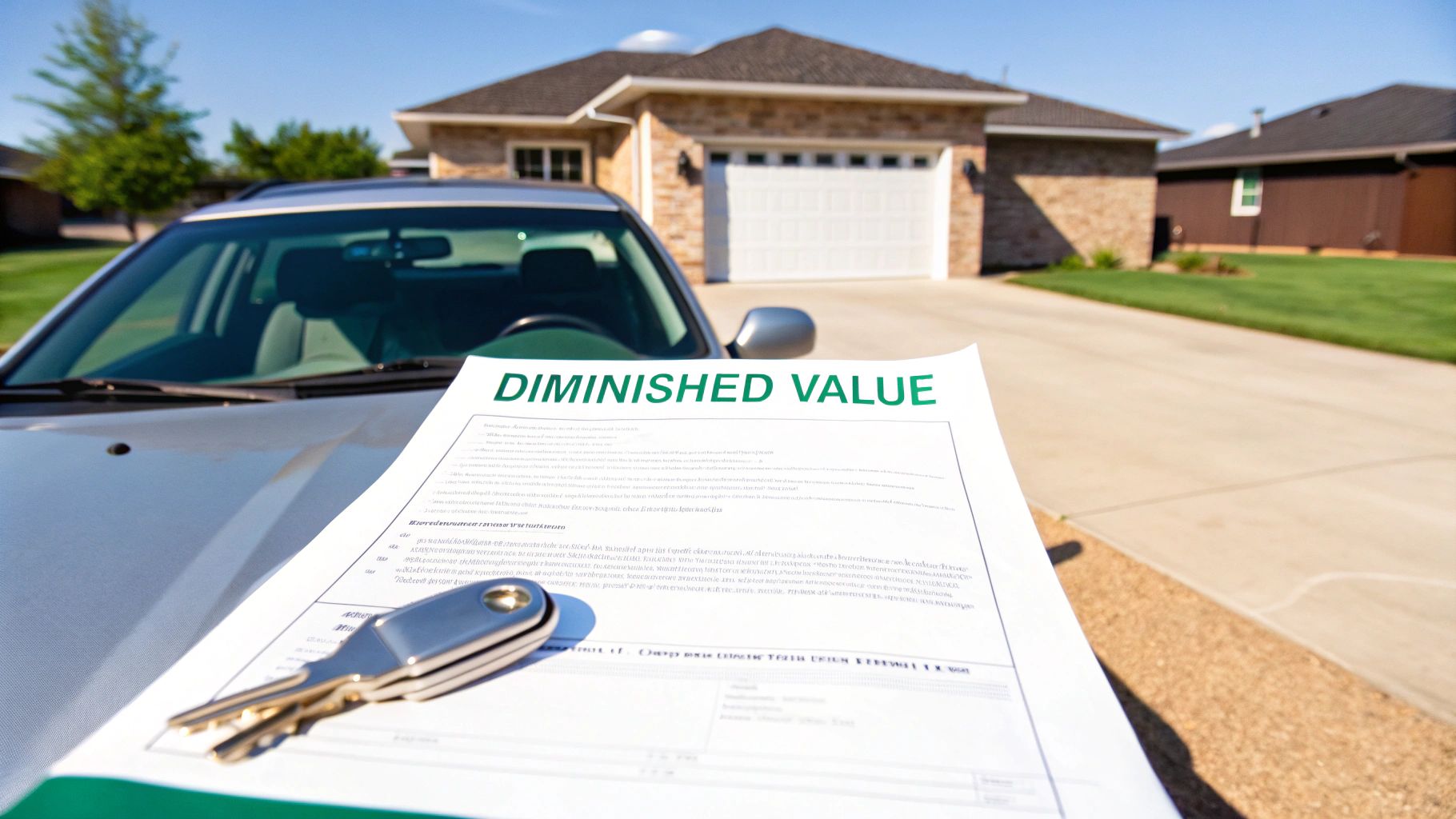
When an insurance adjuster pays for repairs, they’ve only covered part of your loss. While your car may look and drive perfectly, it now has a permanent black mark on its vehicle history report. This is called inherent diminished value.
Imagine you are shopping for a used car. You find two identical vehicles—same make, model, and mileage. One has a clean history, while the other was in a significant collision. You would either choose the accident-free car or demand a steep discount for the damaged one.
That discount is the diminished value you’re now stuck with, and you shouldn’t have to absorb that cost.
The Insurance Company’s Playbook
Insurance carriers are experts at minimizing payouts. When you file a diminished value claim, expect to encounter these common tactics:
- The “17c Formula”: Many insurers use a flawed mathematical formula, often called “17c,” to generate an insultingly low offer. This formula has no basis in real-world market data and has been widely rejected by courts.
- Delay and Deny: The adjuster might ignore your request, hoping you’ll get frustrated and give up. It’s a surprisingly effective strategy against unprepared vehicle owners.
- “It’s Repaired, So There’s No Loss”: They will argue that since the vehicle was fixed to industry standards, it hasn’t lost any value. This argument conveniently ignores the reality of the used car market.
A skilled diminished value lawyer in Florida has seen these tactics countless times and knows exactly how to counter them with hard evidence.
Your Right to Be Made Whole
In Florida, the law supports your right to be “made whole” after an accident. This includes recovering the drop in your car’s market value from the at-fault driver’s insurance. Remember, only the not-at-fault driver can file this type of claim.
Before filing, ensure you have properly documented the accident. Following a guide on What To Do After a Car Accident will help you gather the police reports, photos, and other proof needed to build a strong case.
Simple Scenario: Your two-year-old SUV was worth $40,000 before another driver ran a red light, causing $12,000 in damage. After expert repairs, a dealership might only offer you $34,000 on a trade-in because of the new accident history. That $6,000 difference is your diminished value—a tangible loss you are entitled to recover.
An experienced diminished value claim lawyer knows how to prove that loss. They use certified, data-backed evidence, like an appraisal report from SnapClaim, to show the insurer the real numbers and compel a fair negotiation.
Understanding Your Legal Rights and Deadlines
Winning your diminished value claim depends on following Florida’s specific rules. From strict filing deadlines to eligibility requirements, understanding the legal landscape is the first step toward a successful outcome.
Florida law provides a clear path to compensation, but only if you follow the rules and act in a timely manner.
The Clock Is Ticking: Florida’s Statute of Limitations
In Florida, you have a limited time to pursue your diminished value claim. The state’s statute of limitations—the legal term for a deadline—for property damage claims is four years from the date of the accident.
While four years may seem like a long time, it’s best not to wait. Evidence can get lost, memories fade, and delaying gives the insurance company more leverage to challenge your case. Acting quickly shows the insurer you are serious about recovering your financial loss.
The biggest mistake people make is waiting until they decide to sell their car to think about its lost value. By then, it’s often too late. The ideal time to start your claim is right after the repairs are completed.
The Not-At-Fault Requirement
A critical rule in Florida is that you can only file a diminished value claim if you were not at fault for the accident. This is known as a third-party claim, meaning you are claiming against the at-fault driver’s insurance policy, not your own.
Your own collision coverage is designed to pay for your car’s repairs, but it does not cover its drop in market value. Therefore, proving the other driver was responsible is the first and most important hurdle.
Florida’s Uninsured Motorist Problem
Florida has one of the highest rates of uninsured drivers in the country, which can complicate your claim. If the person who hits you has no insurance, it can feel like you have no options.
However, your own insurance policy may provide a solution. You can learn more about these insurance trends and how they affect drivers across the state.
If you have Uninsured/Underinsured Motorist (UM/UIM) coverage, you can file your diminished value claim with your own insurance company. Your insurer essentially steps into the shoes of the at-fault driver’s company to cover your losses. A knowledgeable diminished value lawyer in Florida can leverage your UM coverage to secure the compensation you deserve.
Key Legal Timelines for Florida Diminished Value Claims
Use this table as a quick reference for the legal rules you must follow when filing a diminished value claim in Florida.
| Legal Requirement | What This Means for You | Why It’s Critical |
|---|---|---|
| 4-Year Statute of Limitations | You must file a lawsuit within four years of the accident date. | Missing this deadline means you forfeit your right to claim compensation entirely. |
| Not-at-Fault Driver | You can only claim against the at-fault driver’s insurance (a third-party claim). | Your own collision policy won’t cover diminished value, so proving the other driver’s fault is non-negotiable. |
| UM/UIM Coverage | If hit by an uninsured driver, your own UM policy can cover your DV claim. | With over 20% of Florida drivers uninsured, this coverage is often your only path to recovery. |
Key Documents to Preserve Your Claim
From the moment an accident occurs, you should be in evidence-gathering mode. The more proof you have, the stronger your case will be. Your attorney will need these essential documents:
- The Official Police Report: This is the primary document that establishes who was at fault.
- Photos and Videos: Take pictures of everything—the accident scene, damage to all vehicles from multiple angles, and the final repairs.
- Repair Invoices: Obtain detailed, itemized receipts from the body shop to prove the severity of the damage.
- Pre-Accident Vehicle Records: Gather maintenance logs or any other records showing your car was in excellent condition before the crash.
Saving these documents creates a clear paper trail that gives your lawyer the ammunition needed to build an undeniable case.
How to Find the Right Diminished Value Lawyer in Florida

Not every personal injury lawyer understands the nuances of a diminished value claim. Finding an attorney with specific, proven experience in this area is the most important decision you will make.
The right diminished value lawyer in Florida already knows the insurance industry’s tactics and how to defeat them. While a general practice attorney may be skilled in other areas, a diminished value case requires a specialist.
Vetting Potential Attorneys
Focus your search on lawyers who have a successful track record with cases just like yours. An attorney who primarily handles medical claims may lack the deep valuation expertise needed for a complex property damage dispute.
When you have a consultation, arrive prepared with a list of direct questions. Their answers will reveal their level of expertise.
Here are some questions to ask:
- How many diminished value cases have you handled in the past year? This question gets straight to their recent, relevant experience.
- What are your typical outcomes with these claims? They can’t promise a result but can speak to their history of securing fair settlements.
- How do you use certified appraisal reports, like those from SnapClaim, in your cases? You want an attorney who relies on data-backed evidence. A lawyer who doesn’t use professional appraisals is a major red flag.
- What is your strategy when the insurer makes a very low offer? Their answer should reflect a proactive, evidence-based approach, not a passive one.
Understanding the Fee Structure
Most reputable diminished value lawyers work on a contingency fee basis. Often called a “no win, no fee” arrangement, this is a significant advantage for vehicle owners.
In simple terms, you pay nothing upfront. The lawyer’s fee is a pre-agreed percentage of the compensation they recover for you. If they don’t win your case, you owe them nothing for attorney fees. This ensures your lawyer is just as motivated as you are to achieve the best possible settlement.
Key Takeaway: A contingency fee aligns your interests with your lawyer’s. They only get paid if you do, which makes expert legal help accessible without any upfront financial risk.
Why Local Knowledge Is a Major Advantage
Hiring a lawyer who knows the local legal landscape in Miami, Orlando, Tampa, or Jacksonville can provide a serious edge.
Insurance companies have regional teams, and their adjusters follow predictable patterns. A local lawyer has likely negotiated with these same adjusters before and knows their tactics. If your case goes to court, an attorney with a strong reputation in the local legal community is invaluable. This insider knowledge can make all the difference.
Building a Claim with Powerful Evidence
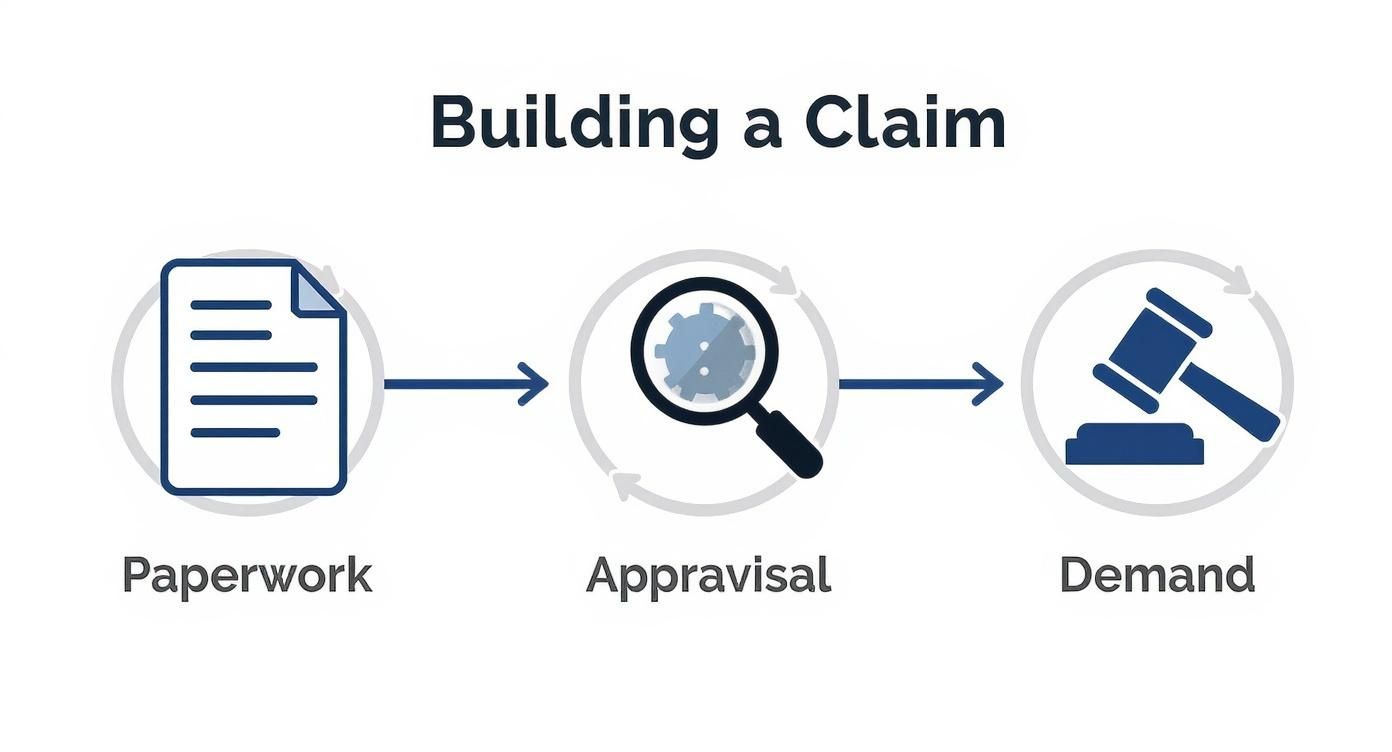
A strong diminished value claim is won with proof, not arguments. Insurance companies are businesses focused on minimizing costs, and they won’t pay based on your opinion. They respond to objective, undeniable data.
To get the compensation you’re owed, you and your diminished value lawyer in Florida must build an airtight case founded on solid evidence.
The Cornerstone of Your Claim: An Independent Appraisal
While police reports and repair invoices are important, the single most powerful piece of evidence is an independent, certified appraisal report. This document transforms your claim from a simple request into a formal, data-driven demand.
Forget about free online diminished value calculators; they are inaccurate and easily dismissed by insurers. A professional appraisal is different.
An insurance company can ignore your opinion, but they cannot easily dismiss a USPAP-compliant report from a certified appraiser. This is the proof you need to negotiate fairly.
A SnapClaim report provides an objective, market-based valuation of your vehicle’s loss. It analyzes real sales data from your specific area, considers your car’s unique features, and calculates the exact drop in fair market value. You can learn more by reading our guide on getting a car appraisal after an accident.
This report is the anchor for your entire claim. Your attorney will use it to draft a demand letter that gives the insurer a clear, defensible number they are legally obligated to consider. Without it, you are fighting a data war with no ammunition.
Navigating the Claim Process From Demand to Settlement
With your evidence and a certified appraisal report from SnapClaim, your diminished value lawyer in Florida can now formally begin the claim process. While it may take time, each step is designed to secure the compensation you deserve.
The process starts with a formal demand letter. This legal document outlines the facts, proves the other driver’s fault, and presents a clear demand for your car’s lost value, supported by your certified appraisal.
The Negotiation Phase
After receiving the demand letter, the insurance company will almost always respond with a lowball offer. This is a standard tactic to test your resolve.
Your lawyer will anticipate this and push back by highlighting the facts:
- The Appraisal: They will emphasize the market data and certified methodology in your report.
- The Repairs: They will use the itemized repair invoice to illustrate the severity of the collision.
- Legal Precedent: They will cite Florida case law confirming your right to diminished value compensation.
This back-and-forth negotiation can take several weeks or even months. Patience is key. Your attorney is countering every low offer with hard evidence until the insurer makes a fair one.
When Insurers Refuse to Settle
Most diminished value claims are settled out of court. However, if an insurer refuses to be reasonable, your lawyer may recommend filing a lawsuit.
This doesn’t mean you’re headed for a long trial. Often, the act of filing a lawsuit is enough to bring the insurance company back to the negotiating table with a better offer. It signals that you are serious and prepared to let a judge decide.
Filing a lawsuit significantly increases the pressure. The insurer now faces its own legal costs, which often makes a fair settlement seem like a much more attractive option.
Whether through skilled negotiation or litigation, a dedicated diminished value lawyer in Florida evens the playing field and fights for your rights against large insurance corporations.
Frequently Asked Questions (FAQ)
Can I claim diminished value if the accident wasn’t my fault?
Yes, absolutely. In Florida, diminished value is a third-party claim, meaning you can only file against the insurance policy of the driver who was at fault for the collision. The police report is the key document used to establish fault.
Is it worth hiring a lawyer for a diminished value claim?
For anything more than a minor claim, hiring a lawyer is highly recommended. An experienced diminished value lawyer in Florida knows how to counter common insurance tactics, build a case supported by evidence like a SnapClaim appraisal, and negotiate for a much higher settlement than you could likely achieve on your own. They work on a contingency fee, so there is no upfront cost to you.
How is diminished value calculated?
Insurance companies often use the flawed “17c formula,” which produces an artificially low number. The correct way to calculate diminished value is through a comprehensive market analysis performed by a certified appraiser. SnapClaim’s methodology compares pre-accident market value to post-repair value by analyzing real-time sales data for similar vehicles, ensuring an accurate and defensible calculation.
What if the at-fault driver is uninsured?
If the at-fault driver has no insurance, you can still file a diminished value claim if you have Uninsured/Underinsured Motorist (UM/UIM) coverage on your own policy. Your insurance company will step in to cover the loss. Given Florida’s high rate of uninsured drivers, this coverage is essential.
SnapClaim provides the data-backed proof you need to negotiate a fair settlement. Our Money-Back Guarantee ensures you can proceed with confidence: if your insurance recovery from the claim is less than $1,000, SnapClaim refunds the full appraisal fee.
Get your free estimate today or order a certified appraisal report to strengthen your insurance claim.
About SnapClaim
SnapClaim is a premier provider of expert diminished value and total loss appraisals. Our mission is to equip vehicle owners with clear, data-driven evidence to recover the full financial loss after an accident. Using advanced market analysis and industry expertise, we deliver accurate, defensible reports that help you negotiate confidently with insurance companies.
With a strong commitment to transparency and customer success, SnapClaim streamlines the claim process so you receive the compensation you rightfully deserve. Thousands of reports have been delivered to vehicle owners and law firms nationwide, with an average of $6,000+ in additional recovery per claim.
Why Trust This Guide
This guide was reviewed and verified by SnapClaim’s auto appraisers, who specialize in diminished value and total loss disputes.
Our team continually updates every article to reflect current insurer guidelines, valuation standards, and court-accepted appraisal practices, ensuring that you’re relying on information trusted by professionals nationwide.
Get Started Today
Whether you’re challenging a low total loss settlement or proving your vehicle’s post-repair loss in value, SnapClaim makes it simple to take the next step.
Generate a free diminished value or total loss estimate in minutes and see how much compensation you may be owed.
👉 Get your free diminished value estimate in Florida