

Was your car recently in an accident? Even after perfect repairs, your vehicle is now worth less simply because it has a crash on its record. This loss is called “diminished value,” and a diminished value calculator for your car is the first step to understanding how much money you might be owed.
This guide will walk you through what diminished value means, how these calculators work, and what you need to do to build a strong claim for fair compensation.
What Is Diminished Value?
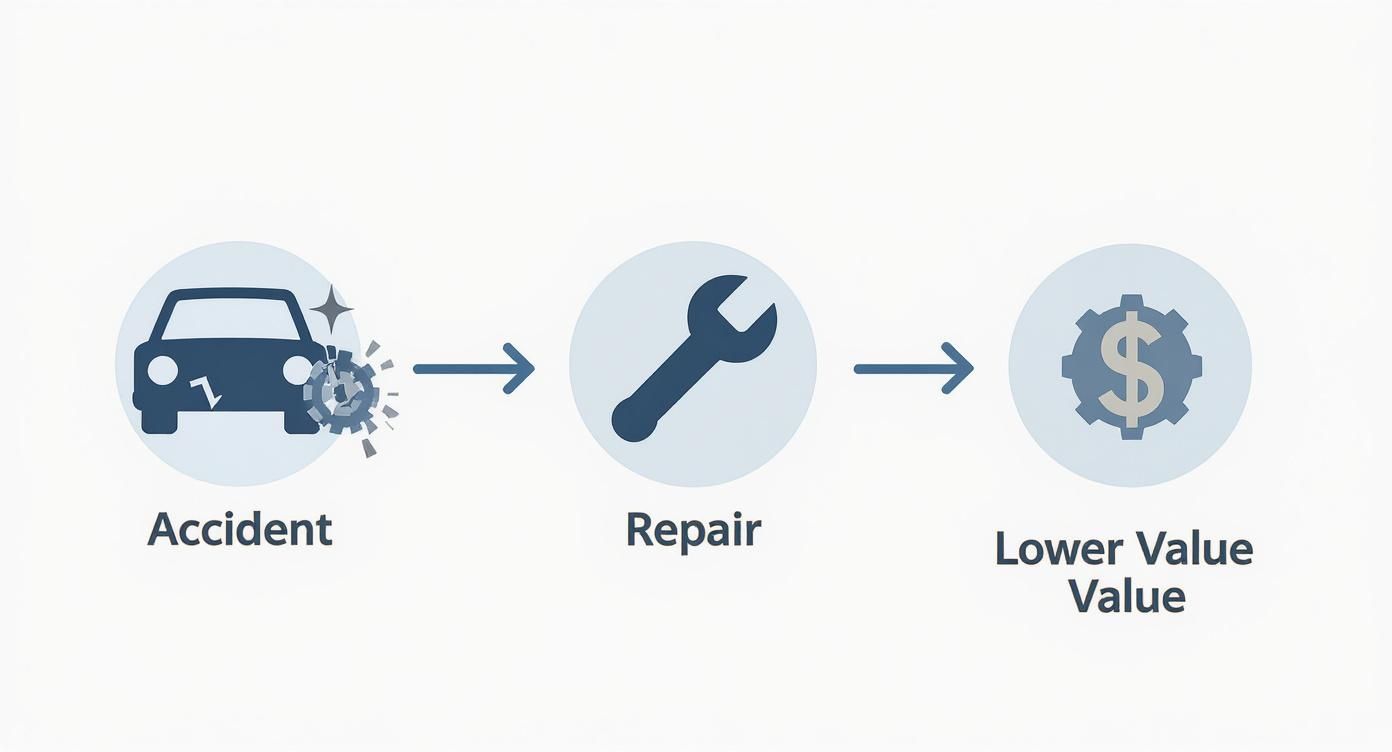
Diminished value is the reduction in your car’s resale value after it has been damaged in an accident and repaired. Even if the repairs are flawless and the car looks brand new, its market price takes a permanent hit because of its accident history.
This isn’t just a theory; it’s a real financial loss you’ll face when you try to sell or trade in your car. Think about it: if you were buying a used car and saw two identical models, but one had an accident on its CARFAX or AutoCheck report, you would naturally pay less for the one with the accident history. That price difference is its diminished value.
The Different Kinds of Diminished Value
While the concept seems simple, diminished value can be broken down into a few types. Understanding them helps clarify what you’re claiming from the insurance company.
- Inherent Diminished Value: This is the most common and important type. It’s the automatic loss in value that occurs as soon as an accident is recorded on the vehicle’s history, even with perfect repairs. This is what most diminished value claims are for.
- Repair-Related Diminished Value: This is any extra loss in value caused by poor-quality repairs. Examples include mismatched paint, using cheap aftermarket parts instead of OEM (Original Equipment Manufacturer) parts, or persistent mechanical issues after the fix.
- Immediate Diminished Value: This is the difference in the car’s value right after the accident, before repairs are made. It’s less common in claims and mainly represents the car’s worth in its damaged state.
For most vehicle owners, inherent diminished value is the key concern. A good diminished value calculator for your car provides a solid starting estimate for this loss, turning an invisible financial hit into a concrete number you can use to start a negotiation with the at-fault party’s insurer.
How a Diminished Value Calculator Works
A diminished value calculator for your car isn’t a magic box; it’s an automated tool that uses a logical formula to estimate your vehicle’s lost value. The accuracy of its estimate depends on the information you provide.
To get a useful number, the calculator first needs to determine your car’s fair market value before the accident happened.
Key Information You’ll Need
To get a reliable estimate, be prepared to enter the following details:
- Vehicle Information: Make, model, year, and trim level.
- Mileage: The odometer reading at the time of the accident.
- Pre-Accident Condition: An honest assessment of your car’s condition before the collision (e.g., excellent, good, fair).
- Damage Severity: Details about the extent of the damage. Was there frame damage? Did the airbags deploy? These factors significantly impact the final value.
The Formula Behind the Estimate
After you input your car’s details, the calculator applies a formula to estimate your loss. A common method used by insurers is the “17c formula,” named after a clause in a Georgia insurance case.
The 17c formula starts with your car’s pre-accident value and applies an immediate 10% cap. So, for a $30,000 car, the maximum diminished value is limited to $3,000 from the start. It then applies further deductions for damage severity and mileage.
While this formula is a starting point, many experts believe it is overly simplistic and often undervalues the true market loss. You can see how this method works with SnapClaim’s 17c formula calculator.
A reliable diminished value calculator for your car considers all these variables. A late-model luxury SUV with structural damage and low mileage will suffer a much higher diminished value than an older sedan with minor cosmetic scrapes. The estimate it provides is your first piece of evidence, showing what your diminished value claim could be worth.
Why an Accident History Tanks Your Car’s Value
An accident creates a permanent “stain” on your car’s history. Once a collision is reported to a vehicle history service like CARFAX or AutoCheck, it’s there for good. This is the primary driver behind diminished value.
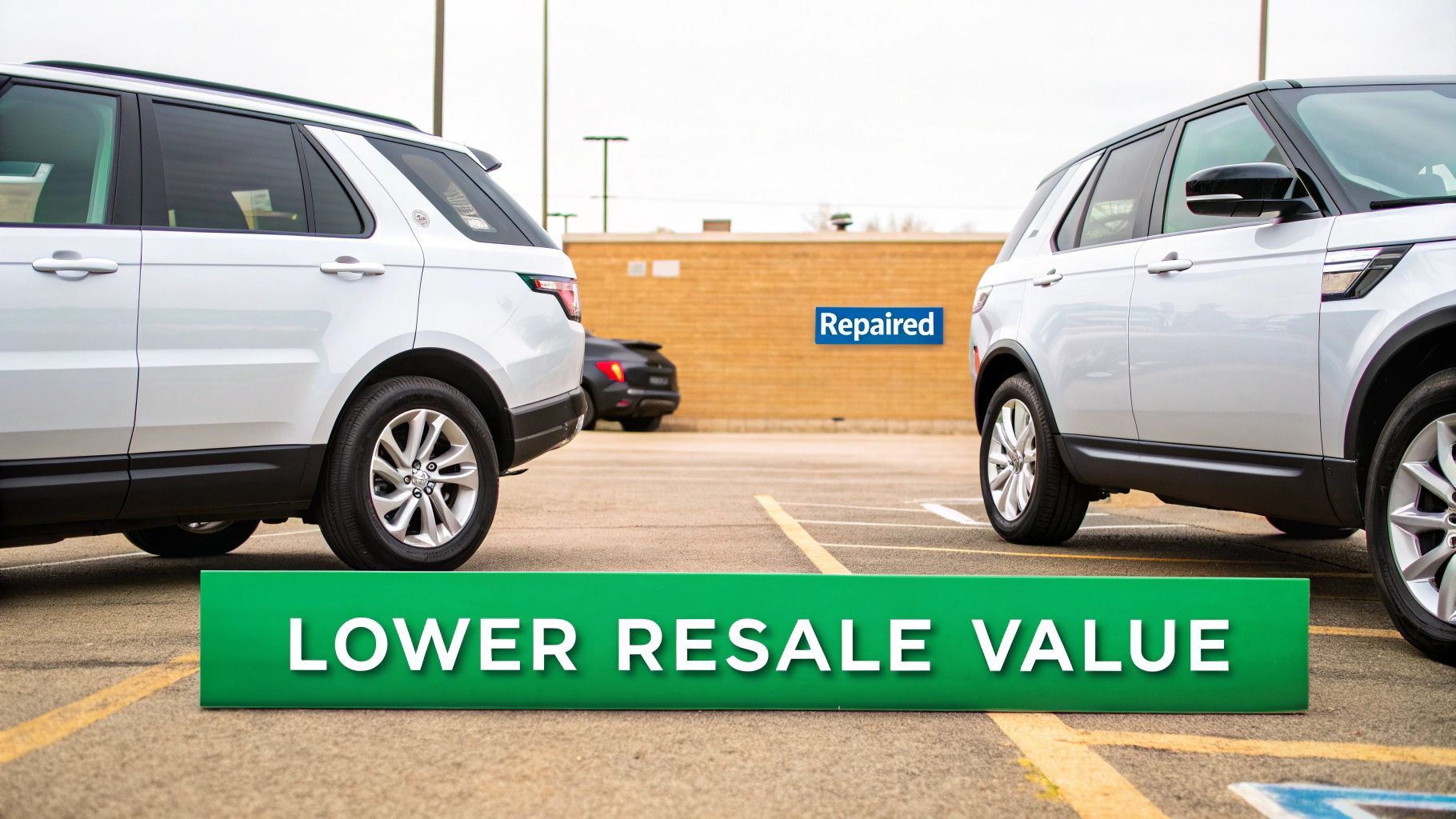
Imagine you’re at a dealership comparing two identical used SUVs. They have the same year, make, model, and mileage. One has a clean history, while the other shows a record of a moderate collision, even with expert repairs.
Which one would you pay more for?
Almost everyone would choose the car with no accident history or demand a significant discount for the other one. This is the core of inherent diminished value. It’s not about the quality of the repairs; it’s about the stigma that an accident record creates in the minds of potential buyers.
The Financial Impact of an Accident Record
This is not just a feeling; it’s a measurable financial loss. Market data shows that vehicles with an accident on their record, even after perfect repairs, sell for 10% to 30% less than identical cars with clean histories. The exact amount depends on the severity of the damage and local market demand. You can learn more about how this is calculated by reading about how a diminished value calculator works.
This is why accepting an insurance check for repairs alone isn’t enough to make you whole. You are also owed compensation for this permanent drop in your car’s value. Using a diminished value calculator for your car is the first step toward quantifying that loss so you can demand fair payment.
The Limits of a Free Online Calculator
A free online diminished value calculator for your car is an excellent starting point. It provides an instant, ballpark figure to help you understand the potential scale of your loss. However, it’s crucial to recognize that this number is a general estimate, not the certified proof an insurance company requires to approve a claim.
These tools are designed for speed and simplicity, which is both a strength and a weakness. An algorithm cannot capture the unique details that determine your car’s true market value.
What Generic Calculators Miss
The biggest drawback of a free calculator is its reliance on broad assumptions. It cannot analyze the specific, real-world factors that make your vehicle and your local market unique.
Here are a few critical details a basic calculator often overlooks:
- Local Market Conditions: A popular SUV in a snowy region like Colorado might hold its value differently than the same model in a warm climate like Florida.
- Quality of Repairs: Work done at a manufacturer-certified shop using OEM parts will result in a higher post-repair value than work from a budget garage using aftermarket components.
- Vehicle-Specific Options: Desirable features like a premium trim package, a rare color, or exceptionally low mileage all add to a car’s value—and thus, increase the amount of value it loses.
- Accident Stigma: A minor fender-bender has a different impact on a buyer’s perception than a major collision involving structural damage, even if the repair costs were similar.
This is why insurance adjusters often dismiss printouts from generic online calculators. They know these tools lack the detailed analysis and market-specific data to justify a payout. They need more than an estimate; they need a defensible appraisal.
Online Estimate vs. Professional Appraisal
It’s helpful to compare the two directly. A free calculator is great for a quick assessment, but a certified appraisal is what you need to negotiate effectively with an insurer.
| Feature | Free Online Calculator | SnapClaim Certified Appraisal |
|---|---|---|
| Accuracy | General ballpark estimate | Specific, data-driven valuation |
| Customization | Based on generic inputs (make, model, year) | Considers repair quality, local market, vehicle options, and history |
| Data Sources | Broad industry averages | Live market data, NADA, KBB, and comparable vehicle sales |
| Insurance Acceptance | Often rejected by adjusters | Accepted as credible evidence by all major insurance carriers |
| Legal Standing | Holds no weight in legal proceedings | Court-ready and USPAP-compliant for legal disputes |
| Purpose | Quick initial assessment | To prove your loss and secure a fair settlement |
While SnapClaim offers a free diminished value estimate to give you an initial idea, it’s our full appraisal report that provides the hard evidence you need to negotiate effectively and get what you’re owed.
How to Build a Strong Diminished Value Claim
Using a diminished value calculator for your car is the first step, but it’s not the last. To successfully recover the money you are owed, you must build a rock-solid, evidence-based claim that an insurance adjuster cannot easily dismiss.
Think of it as building a case. Your strength lies in your documentation. Each piece of evidence helps prove your vehicle’s true loss in value.

Gathering Your Essential Evidence
Before contacting the insurance company, organize your file. A well-prepared claim shows the adjuster you are serious and ready to defend your position.
Here’s what you need to collect:
- The Official Police Report: Establishes the facts of the accident, including fault.
- Detailed Repair Invoices: The final itemized bill from the body shop proves the extent and severity of the damage.
- Pre- and Post-Repair Photos: Photos of the initial damage and the completed repairs show the full story.
- Proof of Pre-Accident Value: Use the original bill of sale or online listings for comparable vehicles to establish your car’s value before the crash.
With these documents, you have the foundation of a strong claim. For more guidance, see our article on how to file a diminished value claim.
The Power of a Certified Appraisal Report
This is the key to transforming your claim from a request into an undeniable demand. Insurance adjusters are trained to minimize payouts. A number from a free calculator or your own research is easy for them to dismiss.
A certified appraisal report from SnapClaim is the single most powerful tool you can have. It provides an independent, expert valuation that analyzes market data, repair quality, and your vehicle’s specific attributes to determine its precise loss in value.
Our reports are built to meet the rigorous standards insurance companies require, providing the defensible, data-backed analysis needed to level the playing field. A certified report supports your case with the credibility it deserves.
Take the Next Step to Recover Your Loss
You now understand that diminished value is a real financial loss. While a diminished value calculator for your car is a great starting point, the key to getting fair compensation is taking decisive action with professional support.
SnapClaim provides the accurate, defensible, and certified appraisal reports needed to give your claim professional weight. An insurance adjuster can dismiss an online estimate, but they cannot ignore a detailed analysis backed by real-world market data. Our reports strengthen your claim and provide the proof you need to negotiate from a position of power.
Don’t just wonder—find out. Get a free estimate today to see what your claim could be worth. When you’re ready to move forward with confidence, order a certified appraisal report to strengthen your insurance claim.
Plus, you can get started with zero risk. If your insurance recovery from the claim is less than $1,000, SnapClaim refunds the full appraisal fee — guaranteed.
Frequently Asked Questions (FAQ)
Here are answers to common questions about diminished value claims.
Can I claim diminished value if the accident wasn’t my fault?
Yes. In most states, you can only file a diminished value claim against the at-fault driver’s insurance company. The claim is intended to compensate you, the innocent party, for the loss in your property’s value caused by someone else’s negligence.
Can I file a diminished value claim if I was at fault?
Generally, no. Your own collision insurance policy is designed to cover the cost of repairs to your vehicle, but it does not cover the resulting loss in resale value.
How long do I have to file a diminished value claim?
The time limit, known as the statute of limitations for property damage, varies by state. It can be as short as one year or as long as six years from the date of the accident. It is critical to check your state’s specific laws to ensure you don’t miss the deadline.
Is it worth filing a claim for minor damage?
It often is, especially for newer or high-value vehicles. Even minor damage can create a negative entry on a vehicle history report, which will lower its value. Use a diminished value calculator for your car to get a quick estimate. If the potential loss is significant, it is worth pursuing.
About SnapClaim
SnapClaim is a premier provider of expert diminished value and total loss appraisals. Our mission is to equip vehicle owners with clear, data-driven evidence to recover the full financial loss after an accident. Using advanced market analysis and industry expertise, we deliver accurate, defensible reports that help you negotiate confidently with insurance companies.
With a strong commitment to transparency and customer success, SnapClaim streamlines the claim process so you receive the compensation you rightfully deserve. Thousands of reports have been delivered to vehicle owners and law firms nationwide, with an average of $6,000+ in additional recovery per claim.
Why Trust This Guide
This guide was reviewed and verified by SnapClaim’s auto appraisers, who specialize in diminished value and total loss disputes. Our team continually updates every article to reflect current insurer guidelines, valuation standards, and court-accepted appraisal practices, ensuring that you’re relying on information trusted by professionals nationwide.
Get Started Today
Whether you’re challenging a low total loss settlement or proving your vehicle’s post-repair loss in value, SnapClaim makes it simple to take the next step. Generate a free diminished value or total loss estimate in minutes and see how much compensation you may be owed.